
Outdoor Patio Lighting Essentials for Queensland Backyards

Does your outdoor lighting stop working after just one wet season? You’re facing a problem many Queensland homeowners share.
At Made Minimal, we help Brisbane homeowners find outdoor lighting that actually lasts in our climate. Unsurprisingly, the most common issue we notice is rust.
Queensland’s humidity and coastal weather destroy cheap fixtures within months, which forces you to replace the same lights every year. Aside from that, people also feel lost about where to start, like which lights work best for patios?
This guide will help you pick patio lighting that suits Queensland’s weather and keeps your space usable at night. First, we’ll go over what types of lights work well outdoors in Queensland.
How to Plan Outdoor Patio Lighting for Queensland Homes
Planning outdoor patio lighting in Queensland starts with understanding the weather demands. After that, you can pick options that save money and stand the test of time.
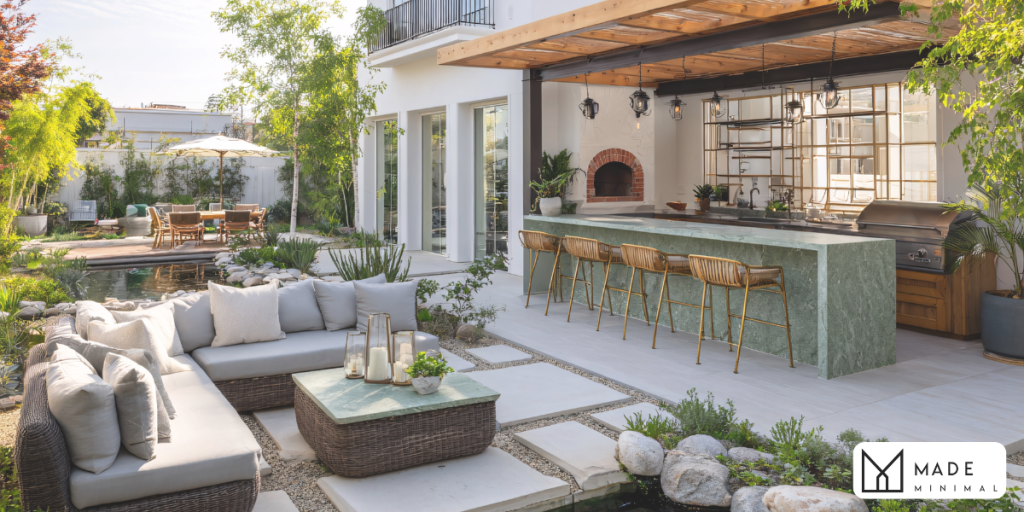
Here’s how to get it right from the start.
Understand Your Environment
Let’s face it, Queensland weather is brutal on outdoor lights. The salt in the air corrodes metal, and the UV rays fade and damage plastics over time. Then our tropical rains test every seal and connection point.
Marine-grade stainless steel handles these conditions best. You also want UV-stable plastics on any decorative parts. These materials cost more upfront, but they last years longer than budget options.
Define Your Lighting Zones
Your outdoor space works better with three types of light: ambient, task and accent.
First is ambient lighting, which sets the mood. You can hang festoon lights (those outdoor string bulbs) across your verandah or add ceiling fixtures for soft, even coverage.
Next, task lighting helps you see what you’re doing, so these can go near your BBQ and food prep areas. And if you want a stylish touch, use accent lighting to highlight garden beds, trees, or key features.
Technical Choices to Make
Next, you’ve got three ways to power outdoor lights:
- Hardwired systems are reliable, but you’ll need an electrician to install them.
- Solar lights cut your energy bills, but they struggle in shaded spots.
- Plug-in fixtures let you move things around easily.
LED lights pair well with any of these options because they use 75% less energy than traditional bulbs. They also stay cooler in Queensland’s heat.
What to Look For On the Box
Before buying, check the IP rating listed on the box, which tells you where lights can safely go. Usually, IP65 is fine for covered patios and verandahs. But if your lights will be fully exposed, go with IP67 or IP68 for gardens and outdoor steps.
Now, let’s look at specific backyard lighting ideas Australian homeowners are using to transform their outdoor spaces.
Outdoor Lighting Tips for Australian Backyards
Australian homeowners often choose backyard lighting that mixes style and practicality. Our climate is tough, so it makes sense. And for the coastal area, we need fixtures that look good and survive heat, rain, and salt air.
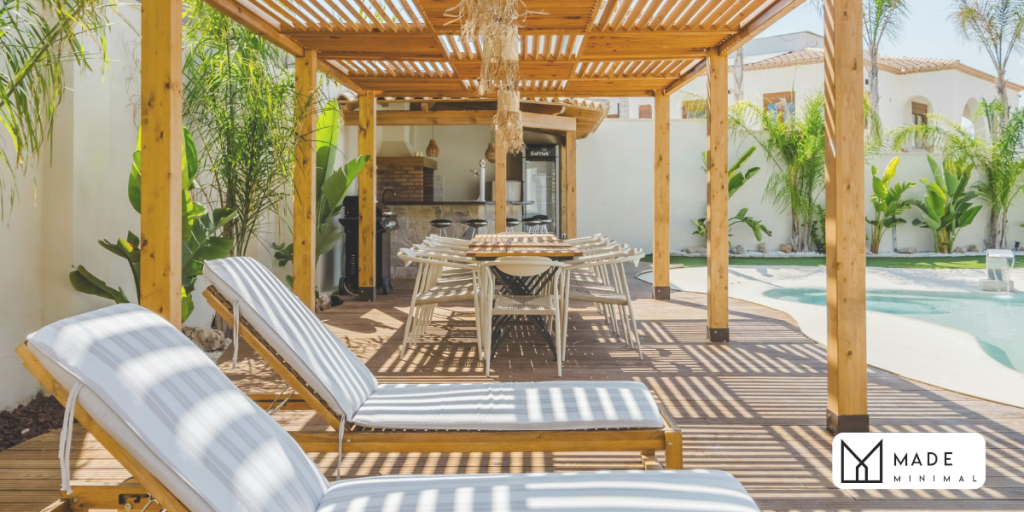
Let’s look at what actually works.
Match Your Light Style to Its Purpose
Ask yourself: Do I want a light for ambience or functionality?
While warm white can create a relaxed feel for entertaining, cool white lights help you see clearly when you’re cooking or walking around. We find the best approach is to use both types to cover mood and safety at the same time.
For example, you can keep the seating and dining areas cosy with warm lights. And save the cool white lights for practical spots like your BBQ and pathways where you need good visibility.
Where to Place Your Outdoor Lights
Ceiling downlights suit covered patios and verandahs perfectly. If you want more character, festoon lights hung overhead spread light evenly while adding style to your outdoor space.
For pathways and garden beds, you can use small ground lights and short post lights (or bollards) to guide people safely at night. Space them every 2 to 3 metres for even coverage, so you don’t get dark gaps. Tree uplights (upward-facing lights at the base of trees) can give you a different effect by lighting up feature trees or standout garden areas.
Don’t forget about outdoor steps. LED stair strip lights are perfect here to make each step visible at night.
Who Should Install Your Lights?
Solar lights and plug-in fixtures are straightforward DIY jobs. You can set them up yourself without touching any wiring. Battery-powered garden lighting also goes in quickly and lets you test different spots before committing.
For anything more permanent, like hardwired outdoor lights, you need a licensed electrician to guarantee both safety and security. This covers ceiling fixtures, permanent wall lights, and anything connected to your house’s electricity.
Go Smarter
Let’s talk about motion sensor lights. They turn on only when someone is nearby. More homeowners are choosing them because they make outdoor lighting easier and help cut energy bills.
Smart outdoor lighting gives you even more control. You can adjust brightness, set schedules, and manage everything from your phone without heading outside.
Make the Most of Your Backyard with Better Lighting
So what do you think? Have you spotted areas in your backyard that need better outdoor lighting after reading this guide?
Here are your key takeaways:
- Pick durable materials like marine-grade stainless steel that survive our climate.
- Match the IP rating to where each light goes.
- Place your outdoor lights where they’ll make your space more usable at night.
Take a moment tonight to walk outside and visualise where better lighting could extend your lifestyle. Could your patio host more evening dinners? Would accent lights make your garden shine?
If you’re ready to upgrade your outdoor patio lighting, reach out to us. We’ll help you select the lighting and furniture that suit your space perfectly.
