
How to make children love reading?
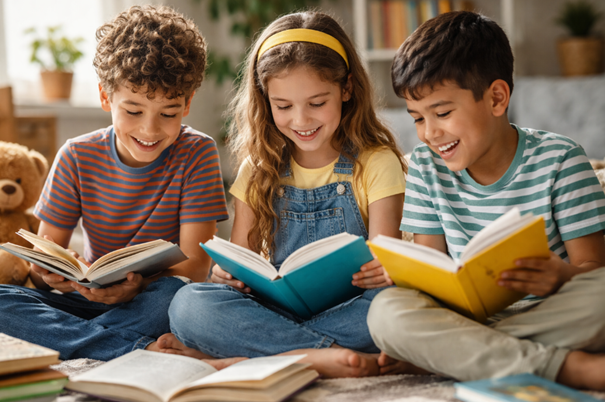
Watching a child light up while turning the pages of a book feels powerful. Yet many parents quietly wonder how to make children love reading without turning it into another task that feels like homework. Reading should never feel like pressure. It can become a space for imagination, calm and connection. A well-chosen book works like a door slightly opened; behind it waits a world full of adventure, humour and discovery. When children associate books with enjoyment rather than obligation, their attitude shifts naturally. The real challenge is not forcing the habit but shaping the environment around it. Understanding what motivates a child, what discourages them and how to gently guide their curiosity makes all the difference.
Why some children resist reading
Children rarely dislike reading without reason. Resistance often stems from frustration with decoding words, difficulty concentrating or feeling disconnected from the material offered at school. If a book feels too complex or unrelated to their interests, motivation drops quickly. Confidence plays a major role. A child who struggles with reading skills may avoid books to protect their self-esteem. In that situation, reducing pressure becomes essential. Shorter texts, graphic novels and illustrated stories can rebuild comfort step by step.
Associations matter as well. If reading is constantly linked to evaluation or correction, it loses its natural appeal. Creating positive experiences outside academic expectations helps restore balance.
Connecting books to an existing passion can unlock interest. For example, if a child already loves animated series or adventure universes, introducing related books can bridge the gap. Some families notice that collecting items connected to favourite characters, such as One Piece figures, sparks curiosity about the original stories behind those characters. When the fictional world already feels familiar, reading becomes an extension of something enjoyable rather than a new demand.
Building a reading-friendly environment at home
The physical setting influences behaviour more than we often realize. A small, inviting reading corner with soft lighting, a comfortable cushion and accessible books encourages spontaneous engagement. When books are within reach, children are more likely to explore them independently. Modelling matters deeply. Children who regularly see adults reading understand that books hold value. Reading does not need to take hours. Even ten quiet minutes in the evening builds consistency. The key lies in repetition and normalizing the habit within daily life.
Variety strengthens interest. Picture books, short novels, graphic novels, magazines and interactive books each offer different entry points. Allowing children to explore different formats prevents boredom and keeps curiosity alive.
Visual universes can reinforce this atmosphere. Exploring platforms such as anime figures canada highlights how strongly children connect with fictional characters. When those characters appear in books at home, reading feels familiar and exciting instead of distant.
Choosing books that truly match your child’s interests
Selecting the right book is often the turning point. A child fascinated by animals, space, sports or fantasy worlds will naturally gravitate toward books reflecting those themes. Forcing titles that feel disconnected rarely leads to enthusiasm. Observing your child’s conversations, favourite shows or hobbies provides clues. Reading then becomes a continuation of an existing interest rather than an imposed activity.
- Adventure
- Animals
- Fantasy
- Manga
- Sports
- Humour
This simple range illustrates how broad reading options can be. Interests evolve quickly during childhood. Adjusting book choices accordingly keeps engagement strong.
Turning reading into a shared experience
Reading aloud remains one of the most powerful tools. Even children who can read independently benefit from hearing stories expressed with emotion and rhythm. A parent’s voice creates atmosphere, making characters feel alive.
Reading together builds emotional connection
Shared reading opens space for discussion. Children can react, ask questions, predict what might happen next. That interaction strengthens comprehension and deepens enjoyment.
Alternating pages can reduce pressure. A parent reads one section, the child reads another. This balance supports skill development while maintaining comfort.
Offering guided freedom
Providing limited choices empowers children without overwhelming them. Presenting three different books and letting them decide increases ownership. That small sense of control significantly improves motivation.
Encouraging without creating pressure
Intrinsic motivation remains essential. Excessive rewards may shift focus away from enjoyment toward earning incentives. Instead, acknowledge effort and show genuine interest in the story itself. Consistency outweighs intensity. Ten minutes daily builds stronger habits than occasional long sessions. Like planting a seed in fertile soil, small repeated actions allow interest to grow naturally over time.
What you can start doing today?
Helping children love reading relies on patience, observation and thoughtful adaptation. When books reflect their interests, when the environment feels welcoming and when reading becomes a shared experience, resistance fades gradually. Every child progresses at their own rhythm. The real question is simple: what small change could you introduce tonight to make the next story feel special?
