
At what age can you read death note?
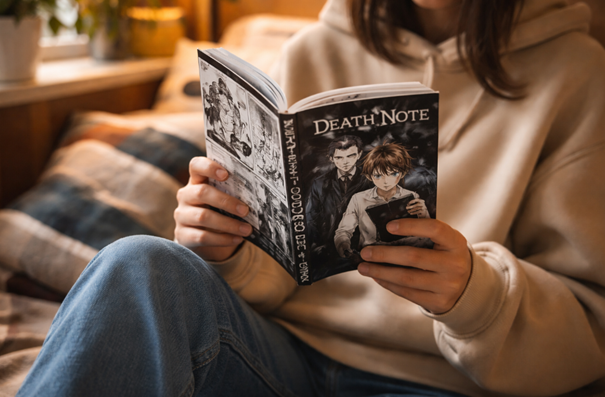
Death Note is not just another action-packed manga. It dives into morality, justice, manipulation, and the consequences of absolute power. If you are wondering whether a child or teenager can read it safely, you are asking the right question. The series explores death, crime, and psychological tension in a mature way. There is limited graphic violence compared to some other titles, but the themes are intense and intellectually demanding. Understanding the recommended age requires looking at official ratings, emotional maturity, reading comprehension, and the psychological depth of the story. This article breaks down each of these aspects in detail so you can make an informed choice based on facts rather than assumptions.
Official age rating for death note in the United States
In the United States, Death Note is generally rated for readers 13 and up by publishers and major distributors. The manga was released by VIZ Media under the Shonen Jump Advanced line, which targets older teens. While it originally ran in a shonen magazine in Japan, the content clearly leans toward a more mature teenage audience. The 13+ recommendation does not mean it is written for children. It indicates that the publisher considers the material suitable for teenagers who can handle darker subject matter. The story revolves around a high school student who discovers a supernatural notebook that kills anyone whose name is written in it. The narrative quickly shifts into a psychological battle between Light Yagami and the detective known as L. The tension comes from strategic manipulation rather than physical combat.
There is no explicit gore in most volumes. Death scenes are usually depicted through heart attacks or implied consequences. However, the moral implications of mass killing, ethical dilemmas, and psychological pressure are central to the plot. These elements require a level of maturity beyond elementary school age. For parents, the rating of 13+ is a useful baseline. It suggests middle school and high school readers are the intended audience. Younger children may struggle with the philosophical complexity and darker tone.
Why death note may not be suitable for younger children?
The primary concern is not graphic violence but psychological intensity and moral complexity. Death Note asks heavy questions: Is it acceptable to kill criminals to create a better world? Who decides what justice means? Can absolute power corrupt absolutely? These themes are not presented in a simplified way. The protagonist, Light, is intelligent and charismatic. He begins with a seemingly noble goal: eliminating criminals. Over time, his character shifts into something far more disturbing. Younger readers may not fully grasp the nuance of this transformation. They might focus on the power fantasy without understanding the ethical downfall.
There are also scenes involving crime investigations, manipulation, hostage situations, and emotional pressure. The tension is constant. The manga reads like a high-stakes chess match where each move carries life-or-death consequences. For a child under 12, this level of psychological suspense can feel overwhelming.
In addition, the narrative includes themes such as:
- Death
- Justice
- Corruption
- Manipulation
- Power
- Moral ambiguity
These topics are handled in a serious manner. Readers must be able to separate fiction from real-world behavior. A younger child may not have developed that level of critical thinking yet.
Is death note appropriate for teenagers?
For most teenagers aged 13 to 16, Death Note is generally appropriate, provided they are comfortable with darker themes. Many high school readers are drawn to it because of its intellectual depth rather than violence. The series rewards careful reading. Every chapter builds on psychological strategies, hidden motives, and layered dialogue. Teens who enjoy crime dramas, mystery novels, or complex character studies often appreciate Death Note. It does not rely on flashy battles. Instead, it creates tension through deduction and moral conflict. In that sense, it can even stimulate critical thinking skills.
Parents may want to discuss the story with younger teens. Talking about Light’s choices and their consequences can transform the reading experience into a thoughtful conversation about ethics. Rather than glorifying violence, the manga ultimately portrays the cost of arrogance and unchecked authority. Emotional maturity plays a major role. Some 13-year-olds are ready for these themes. Others may prefer to wait a year or two. Knowing the individual reader matters more than strictly following a number.
How death note compares to other popular manga?
When evaluating age suitability, comparison helps. Many parents assume that because Death Note is published in a shonen category, it must be similar to series focused on friendship and adventure. That assumption is misleading. Compared to action-driven titles, Death Note contains far less physical combat. Instead of martial arts or superpowered battles, the conflict unfolds through psychological warfare. This makes it intellectually demanding. In some ways, it resembles a crime thriller more than a traditional action manga.
It is also significantly less graphic than some darker seinen series aimed at adults. There are no prolonged torture scenes or explicit imagery. The horror element comes from atmosphere and moral tension. If a teen already reads crime novels, psychological thrillers, or watches detective dramas rated for teens, Death Note falls within a similar range. The supernatural element adds intrigue rather than graphic horror.
Signs a reader may be ready for death note
Age alone does not determine readiness. Consider these indicators instead:
- A reader who can discuss complex moral issues without confusion is likely prepared. Someone who understands that fictional violence does not justify real-life behavior shows healthy separation between story and reality. Strong reading comprehension also helps, since much of the plot relies on dialogue and internal reasoning.
- If a teenager enjoys analytical thinking, puzzles, and layered storytelling, Death Note can be engaging rather than disturbing. On the other hand, if a child is easily frightened by suspense or becomes anxious during intense scenes, waiting may be wiser.
Final thoughts on the right age to read death note
Death Note sits at the crossroads between teenage fiction and mature psychological drama. For most readers, 13 and up is a reasonable starting point, though emotional maturity matters more than a specific birthday. The series challenges its audience to think about justice, power, and responsibility. If you believe the reader can handle those themes thoughtfully, the story can be both gripping and intellectually rewarding. If hesitation remains, reading a few chapters together can help you decide with confidence.
